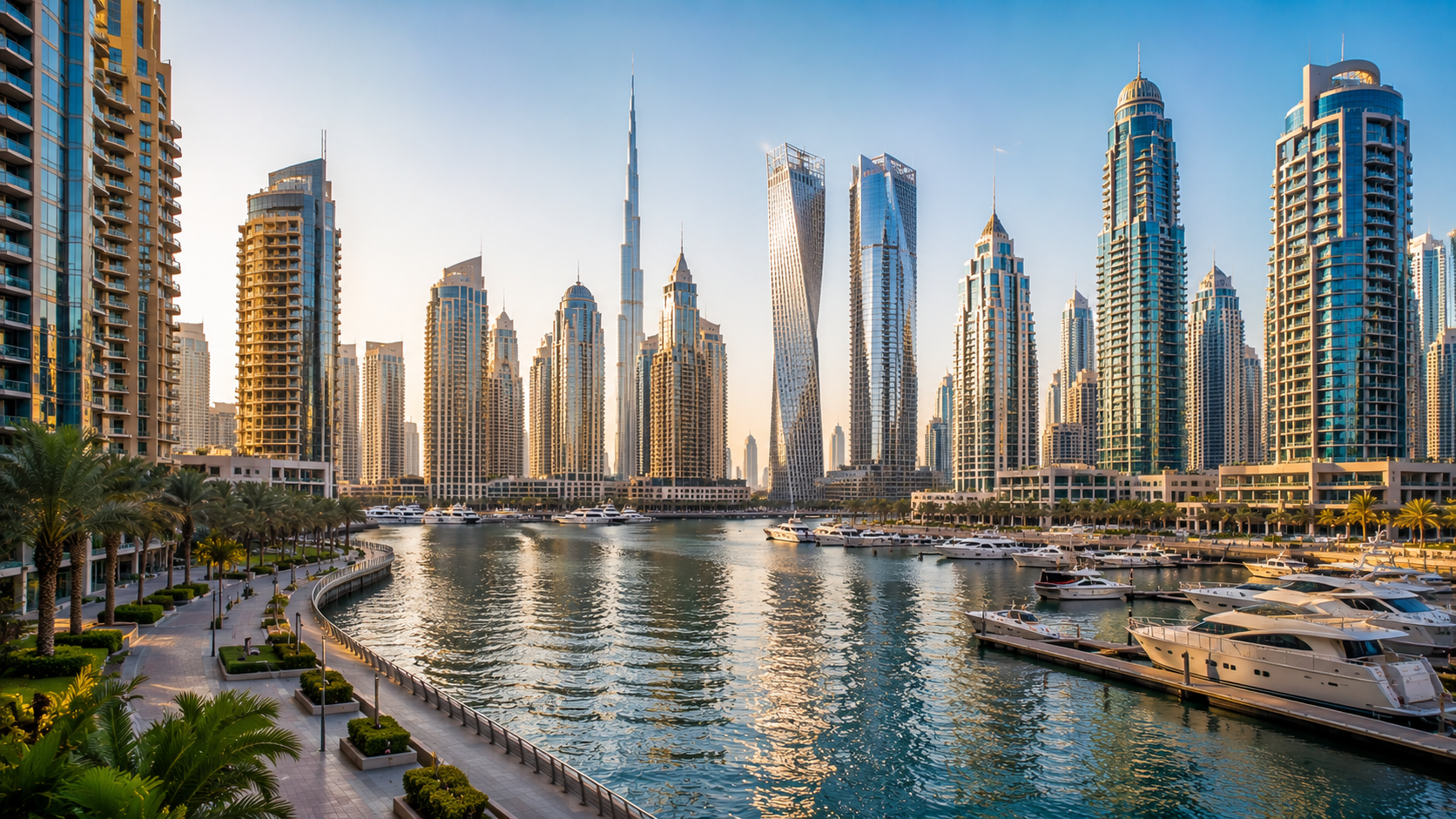
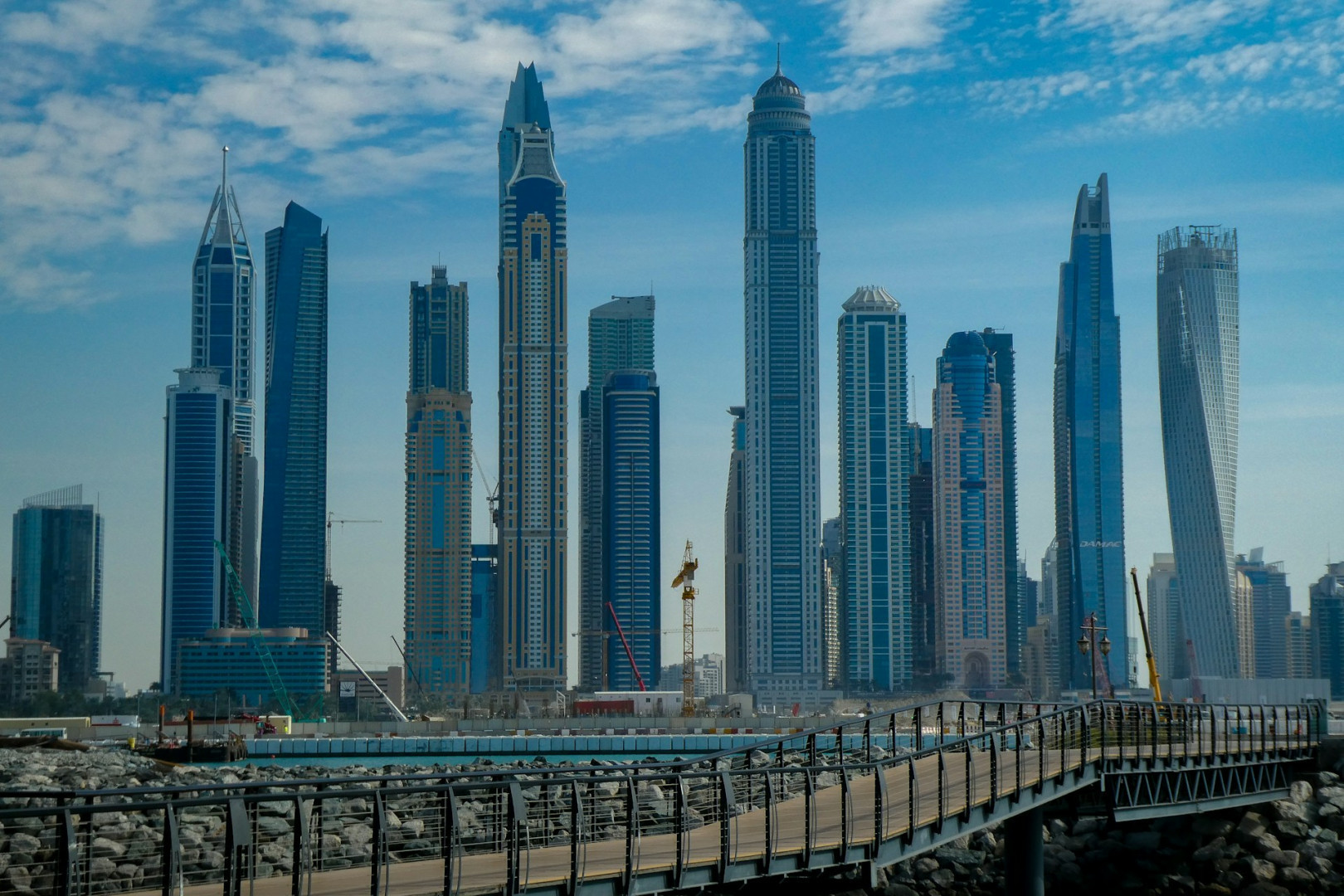
Off-plan properties
Dubai has become one of the most attractive real estate markets in the world. International buyers are drawn to the city by tax advantages, strong rental demand, modern infrastructure, and a rapidly growing population. As a result, Dubai real estate investment continues to attract buyers from Europe, Asia, the Middle East, and North America.
However, purchasing property abroad always raises important questions. Even experienced investors want to understand the legal framework, financial obligations, and potential risks before entering a new market.
Below are the most common concerns of real estate buyers and investors in Dubai, along with clear explanations of how the market operates and what protections exist for international investors.
One of the first questions international buyers ask is whether foreigners can legally own property in Dubai. The answer is yes. Foreign nationals can purchase property in designated freehold areas, where buyers receive full ownership rights to both the property and the land it occupies. These rights are comparable to property ownership in many major global markets.
Popular freehold areas include:
| Area | Property type | Buyer profile |
|---|---|---|
| Dubai Marina | Waterfront apartments | Investors and expatriates |
| Downtown Dubai | Luxury apartments | End users and high-net-worth buyers |
| Business Bay | Residential and serviced apartments | Professionals and investors |
| Palm Jumeirah | Luxury waterfront residences | Luxury buyers and investors |
| Jumeirah Village Circle | Affordable apartments | Entry-level investors |
All property transactions are regulated by the Dubai Land Department (DLD), which maintains official records of ownership and ensures that every transaction is legally registered. Buyers receive an official title deed, confirming full ownership of the property.
Transparency is another key concern for international investors. Buyers want to know whether regulations are clear and whether their investment is protected.
Dubai has built one of the most regulated real estate markets in the Middle East. Several government institutions oversee the sector:
These institutions regulate developers, brokers, and property transactions to ensure transparency and investor protection.
One of the most important safeguards for off-plan buyers is the escrow account system. When investors purchase property under construction, their payments are deposited into government-monitored escrow accounts.
Funds are released to developers only after construction milestones are verified by auditors approved by the Dubai Land Department. This system significantly reduces the risks traditionally associated with off-plan real estate investments.
The process of buying property in Dubai is relatively straightforward and well structured.
A typical property transaction usually involves the following steps:
Once the transaction is registered, the buyer receives the official title deed, confirming legal ownership.
Many international investors complete the purchase process remotely through authorized representatives, making it possible to invest in Dubai property even without being physically present in the UAE.
Another common concern involves the true cost of purchasing property in Dubai. While the purchase price is the main expense, there are several additional transaction costs.
The primary mandatory cost is the Dubai Land Department transfer fee, which equals 4% of the property value.
Other typical costs include:
| Expense | Typical amount |
|---|---|
| Dubai Land Department transfer fee | 4% of property value |
| Registration trustee fee | Approx. AED 4,000 |
| Real estate agency commission | Usually around 2% |
| Annual service charges | Depends on building |
Service charges cover building maintenance, security, landscaping, and shared amenities such as gyms, pools, and concierge services.
In most residential developments, service charges typically range between AED 10 and AED 30 per square foot per year, depending on the building quality and amenities.
These costs are important for investors calculating potential rental profitability.
Investors purchasing off-plan property often worry about the reliability of developers and the possibility of construction delays.
Dubai has introduced strict regulatory requirements before developers are allowed to launch new projects. Developers must register their projects with RERA and demonstrate sufficient financial capacity.
In addition to the escrow system, developers must reach specific construction milestones before they can access funds from escrow accounts.
Investors usually evaluate developers based on several criteria:
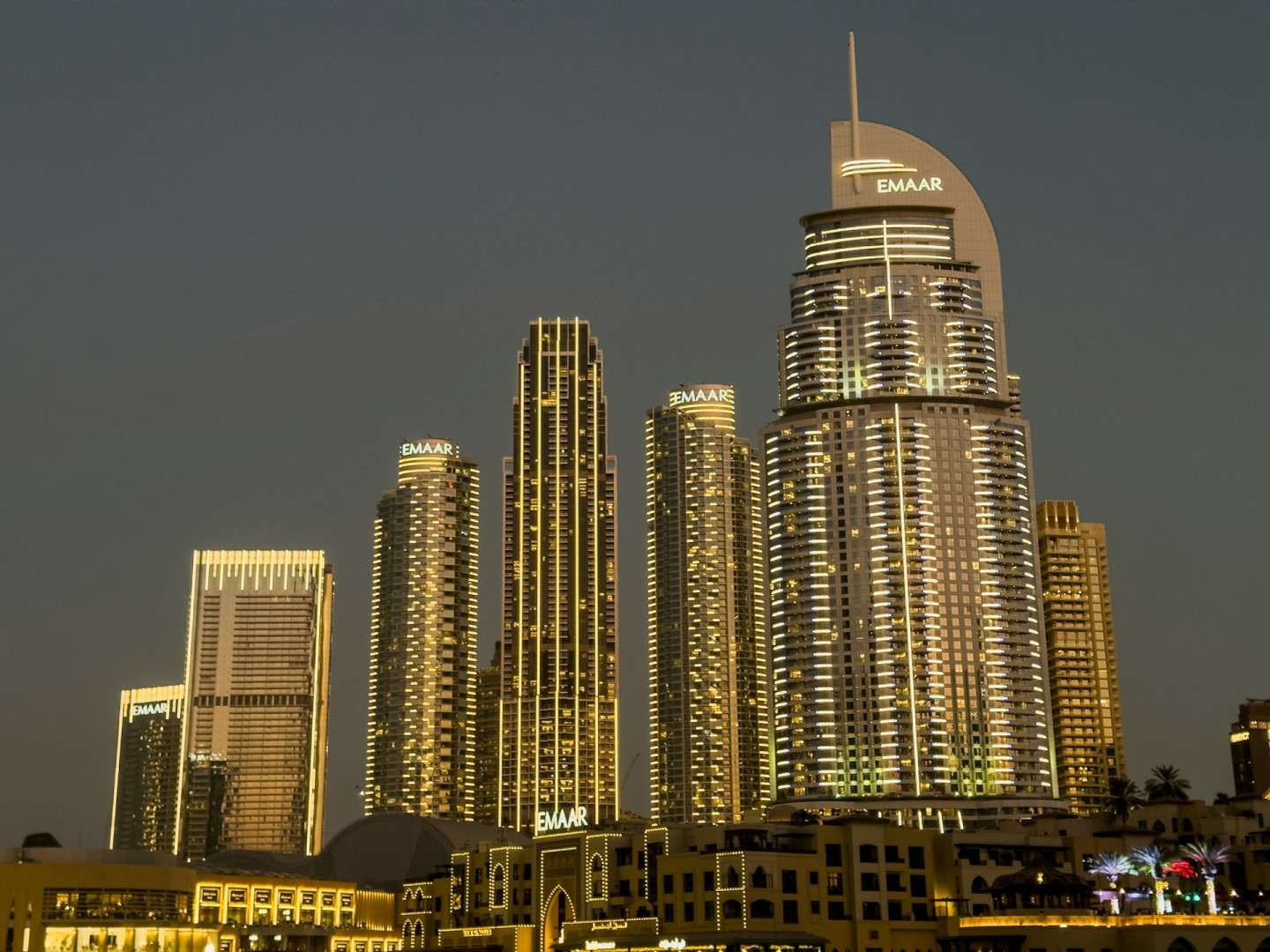
Leading developers such as Emaar, Sobha, DAMAC, Nakheel, and Meraas have delivered numerous projects across Dubai and maintain strong reputations among international buyers.
Choosing an experienced developer significantly reduces investment risk.
Rental income is one of the main reasons international buyers consider Dubai property investment. Compared with many major global cities, Dubai offers relatively attractive gross rental yields.
Average returns typically fall within the following ranges:
| Area | Average rental yield |
|---|---|
| Dubai Marina | 5–7% |
| Business Bay | 5–7% |
| Jumeirah Village Circle | 6–8% |
| Dubai Creek Harbour | 5–6% |
Actual returns depend on factors such as property size, building quality, location, and proximity to transportation infrastructure.
Short-term rentals can sometimes generate higher income in tourist-heavy areas, although they often require professional property management.
One of the most attractive features of Dubai’s real estate market is the flexibility of developer payment plans.
Unlike many countries where buyers must pay the full property price upfront or rely heavily on mortgage financing, Dubai developers frequently offer installment payment plans for off-plan properties.
A typical payment structure may look like this:
| Payment stage | Example structure |
|---|---|
| Booking payment | 10–20% |
| During construction | 40–50% |
| On project completion | 30–40% |
Some developers also offer post-handover payment plans, allowing buyers to continue paying for the property for one to five years after project completion.
These flexible payment structures make apartments in Dubai from developers accessible to a wider range of international investors.
Liquidity is another important factor for investors. Buyers want to understand whether they will be able to resell their property if their investment strategy changes.
Dubai generally offers strong liquidity, particularly in well-established districts with high tenant demand.
Locations such as Downtown Dubai, Dubai Marina, Business Bay, and Palm Jumeirah typically maintain consistent demand from both investors and end users.
However, resale potential depends on several factors:
Investors who purchase well-located properties from reputable developers usually find it easier to sell their assets if needed.
Like any global real estate market, Dubai property investment also involves certain risks that investors should consider.
The most common risks include:
However, many of these risks can be minimized by selecting the right location, choosing reputable developers, and evaluating the long-term fundamentals of each project.
Professional market analysis and due diligence play an important role in reducing these risks.
Dubai’s real estate market experiences natural cycles similar to other international property markets.
Periods of rapid price growth are sometimes followed by stabilization phases as supply and demand rebalance.
Several factors influence these market cycles:
For long-term investors, understanding the development plans of different districts is often more important than short-term price fluctuations.
Areas undergoing major infrastructure investment or urban development frequently demonstrate stronger long-term capital growth.
Despite the concerns mentioned above, Dubai continues to attract global real estate investors.
Several structural advantages explain this sustained demand:
Combined with flexible payment plans and large-scale development projects, these advantages make Dubai real estate one of the most dynamic property markets globally.
Entering a new real estate market can be challenging without local expertise. Professional guidance helps investors understand regulations, evaluate developers, and identify the most promising opportunities.
DDA Real Estate works with international buyers to provide access to verified residential developments across Dubai.
Our specialists help clients:
With extensive experience in the Dubai real estate market, the DDA Real Estate team helps investors make informed and confident decisions.
Can foreigners buy property in Dubai?
Yes. Foreign nationals can purchase property in designated freehold areas of Dubai, where buyers receive full ownership rights.
What is the average ROI for Dubai real estate?
Rental yields in Dubai typically range between 5% and 8% gross annually, depending on the property type, location, and market conditions.
Is buying off-plan property in Dubai safe?
Yes. Off-plan developments are regulated by RERA, and buyer payments are held in escrow accounts until construction milestones are verified.
Can property investment provide UAE residency?
Yes. Investors who purchase property above certain value thresholds may qualify for UAE residency visas linked to property ownership.
Do I need to be in Dubai to purchase property?
No. Many international buyers complete transactions remotely through authorized representatives and real estate agencies.
If you are considering investments in Dubai real estate, the specialists at DDA Real Estate can help you analyze the market, compare projects, and select properties aligned with your long-term investment strategy.