Off-plan properties
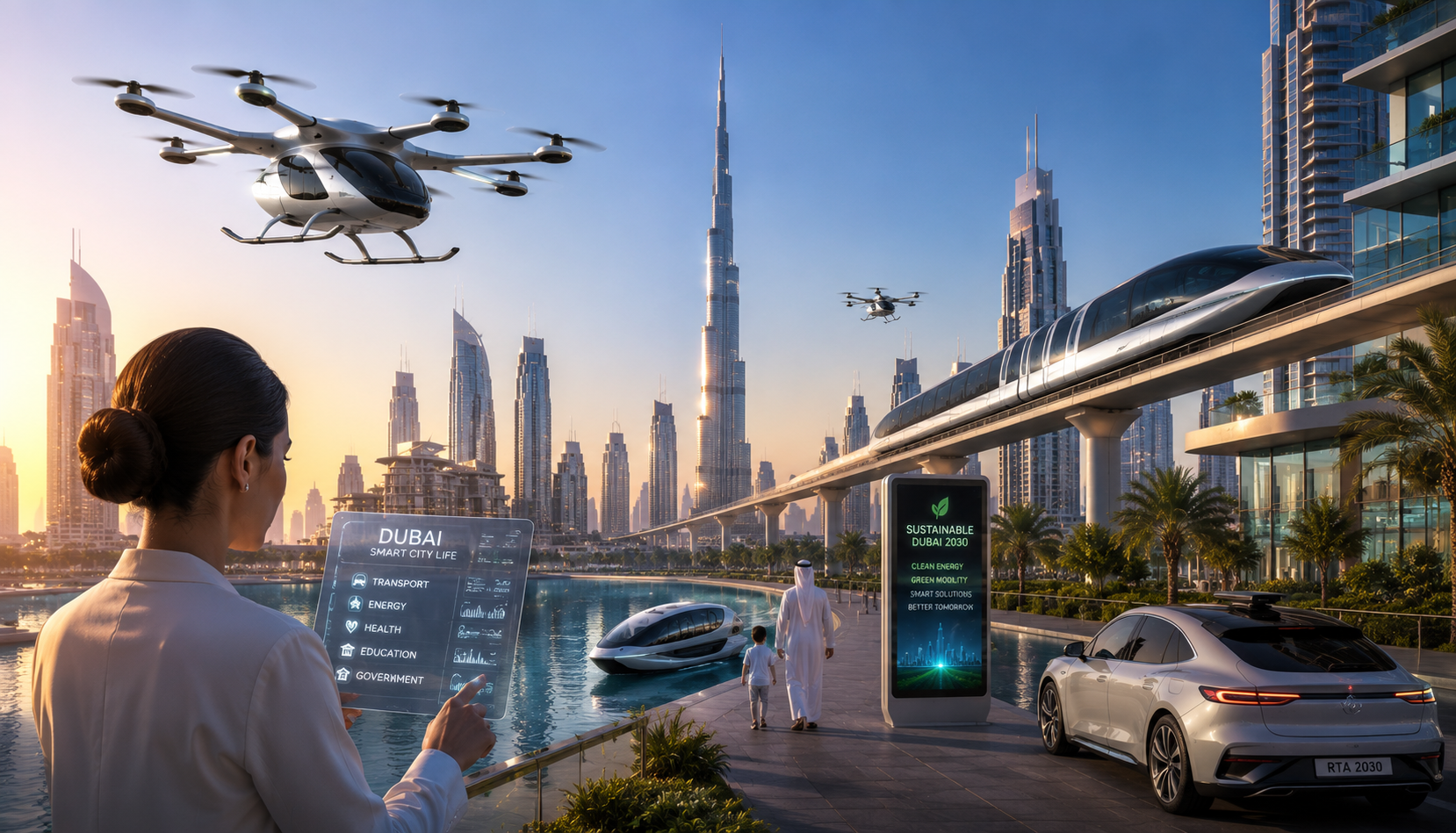
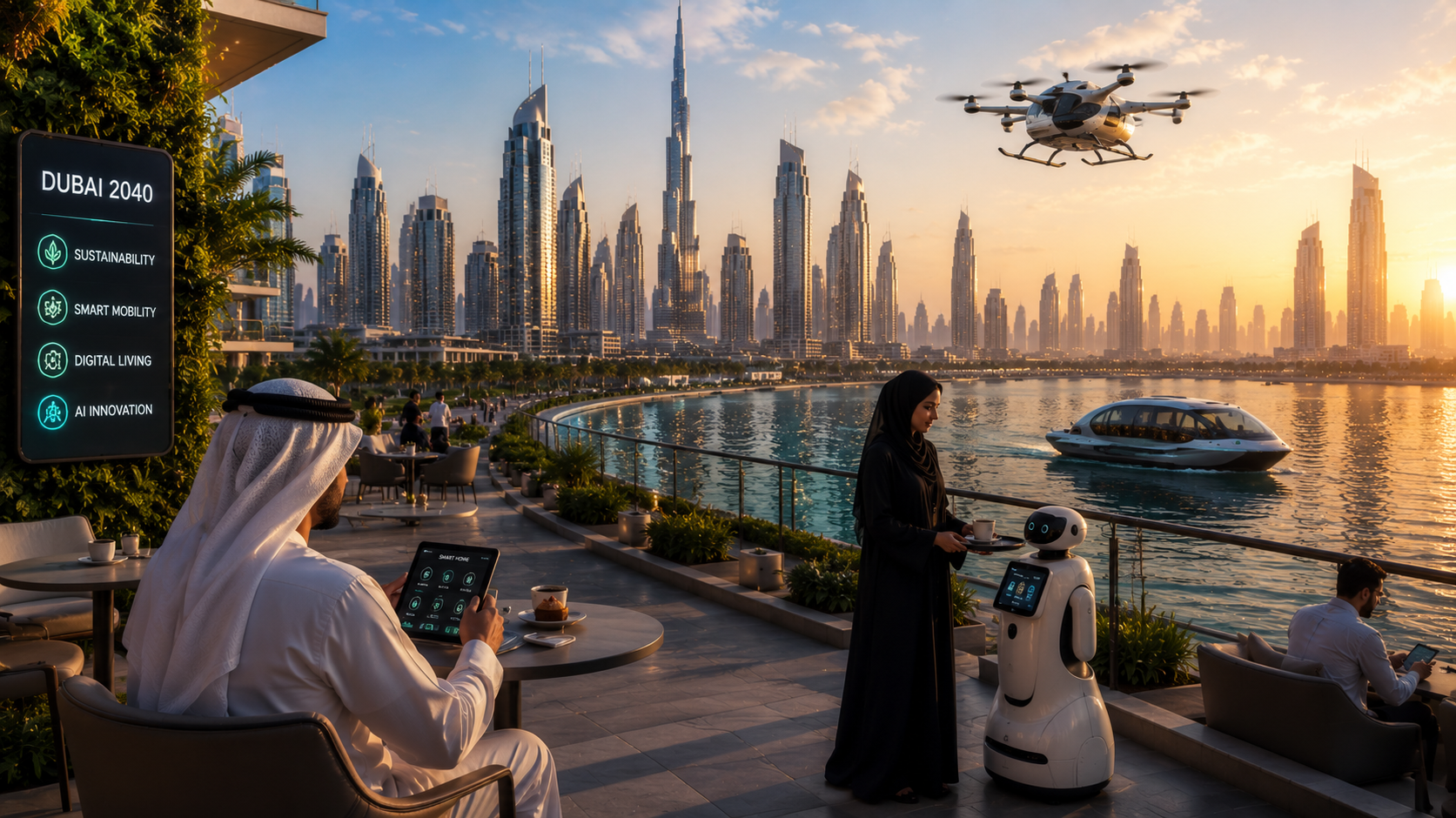
Dubai does not iterate — it leaps. While most cities debate smart city pilots, Dubai has been running them at scale for nearly a decade. The result is a place where the gap between "announced" and "operational" is unusually short, and where technology has quietly restructured how people move, work, pay, and live on an everyday basis.
This is not a story about ambition. It is a story about what is already working.
| Metric | Figure |
|---|---|
| Dubai Metro annual ridership | 200M+ passengers |
| Metro on-time performance | 99%+ |
| Government services on Dubai Now app | 130+ |
| City population (2024) | 3.7M+ |
| Target autonomous journeys by 2030 | 25% of all trips |
| AI-powered government services target (2030) | 1,000+ |
Transportation in Dubai has moved well beyond infrastructure. The RTA operates one of the most digitally integrated transit systems in the world — metro, tram, buses, water taxis, and ride-hailing all linked through a single Nol card ecosystem.
What is already operational:
What is in active rollout:
For daily residents, the practical impact is already visible: seamless digital payments, predictive routing, and a transit system that actually runs on time.
One of Dubai's least-celebrated but most consequential innovations is in government services. The Dubai Now app consolidates over 130 services — visa renewals, utility payments, traffic fines, business licensing — into a single platform. The target was a fully paperless interaction model. It is largely achieved.
Key milestones:
For international investors and relocants, this matters practically: the bureaucratic friction that deters entry into most markets has been systematically engineered out of the Dubai experience.
Healthcare:
Education:
For relocating families, this removes two of the biggest friction points of an international move: healthcare access and school enrollment.
The most telling sign that a city's technology works is when residents stop noticing it. Dubai is approaching that point in several areas.
| Area | What It Looks Like on the Ground |
|---|---|
| Payments | Contactless is the default — cash is genuinely rare across retail, F&B, and transport |
| Delivery | 15–30 min from dark stores is standard; same-day across most residential districts |
| Building access | Facial recognition and smart access control standard in new developments |
| Energy management | Occupancy-based climate and utility systems in branded and smart-home residences |
| Maintenance | Predictive maintenance systems reduce downtime in newer buildings |
The Dubai Future Foundation actively accelerates adoption of these technologies through structured partnerships with private developers — which means the gap between "pilot" and "citywide standard" continues to compress.
Dubai's D33 Economic Agenda sets the framework through 2033: doubling the size of the economy, cementing Dubai as a top-three global city for business and talent, and embedding AI across all public services by 2030.
The most significant targets:
The digital twin project is particularly significant for real estate. It enables infrastructure planning and development approval at a precision and speed that fundamentally changes how the city grows — and gives investors who understand this pipeline a structural advantage in identifying which districts are next.
Dubai has a track record of delivering on stated targets: the Route 2020 extension, the paperless government initiative, and the autonomous vehicle rollout have all landed on or ahead of schedule.
Innovation does not exist in a vacuum — it accumulates into quality of life, and quality of life drives real estate demand. The cities that attract the highest concentration of skilled, mobile, high-income residents are those that reduce friction and increase daily convenience. Dubai is doing this more deliberately and more successfully than almost anywhere else.
For investors:
For relocants:
The technology is already here. The question is where you want to live inside it.
Is Dubai really a smart city or mostly marketing?
Dubai consistently ranks among the top five smart cities globally by independent indices, with driverless metro, digital government services, and unified healthcare records all fully operational.
How does digital government affect property transactions?
Title deeds are issued electronically and most Dubai Land Department transactions complete digitally within days.
Does smart home technology come standard in new Dubai developments?
In most new-build and branded residence projects, smart access, climate control, and building management systems are included as standard features.
How does Dubai's innovation agenda affect property values?
Districts with strong smart infrastructure and metro connectivity consistently outperform on rental yield and capital appreciation.
Is the D33 agenda realistic, or just government projections?
Dubai has delivered the Route 2020 extension, paperless government, and autonomous vehicle rollout all on or ahead of schedule — the execution track record is strong.
Considering a move to Dubai or looking at the investment case more closely? DDA Real Estate advises investors and relocants on property selection across Dubai's key districts — from off-plan branded residences to ready inventory with immediate yield. Get in touch to discuss what fits your goals. Contact us to schedule a consultation with a Dubai specialist.