
Off-plan properties
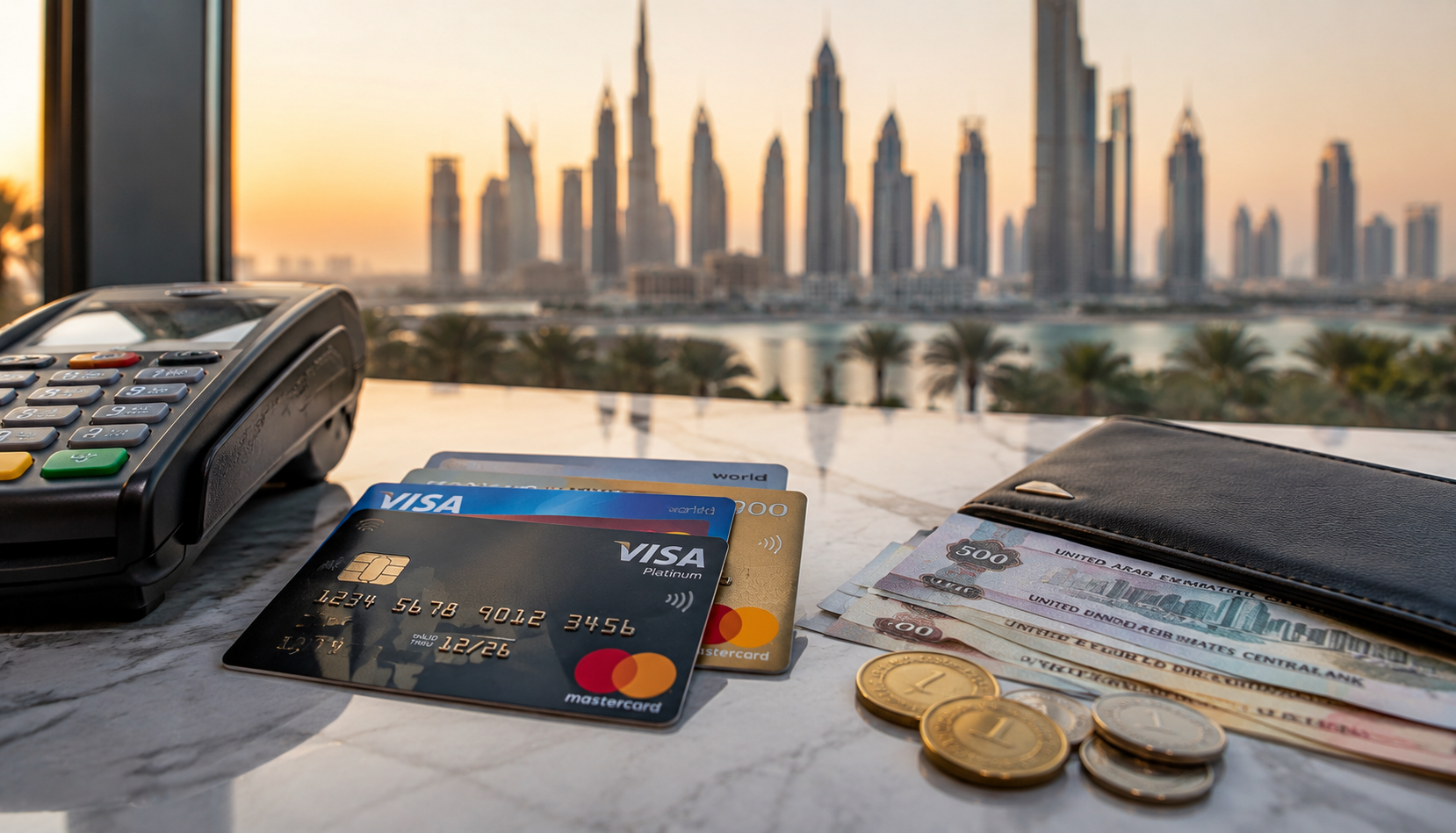
The official currency is the UAE Dirham (AED), pegged to the US dollar at 1 USD = 3.6725 AED since 1997. This gives the dirham exceptional stability for international visitors and investors. In March 2025, the Central Bank of the UAE unveiled a new dirham symbol — a Latin D crossed with two horizontal lines — now appearing on ATMs, banking apps, and price tags. Banknotes circulate in denominations of 5, 10, 20, 50, 100, 200, 500, and 1,000 AED. Foreign reserves backing the peg sit at ~$295 billion (January 2026).
| Card Network | Acceptance | Best For |
|---|---|---|
| Visa | 99%+ of merchants | Universal — every terminal in the UAE |
| Mastercard | 99%+ of merchants | Universal — equivalent to Visa |
| American Express | Hotels, premium dining, major retail | Travel rewards; not all small merchants |
| UnionPay | Major retailers and chains | Chinese, CIS, Turkish-issued cards |
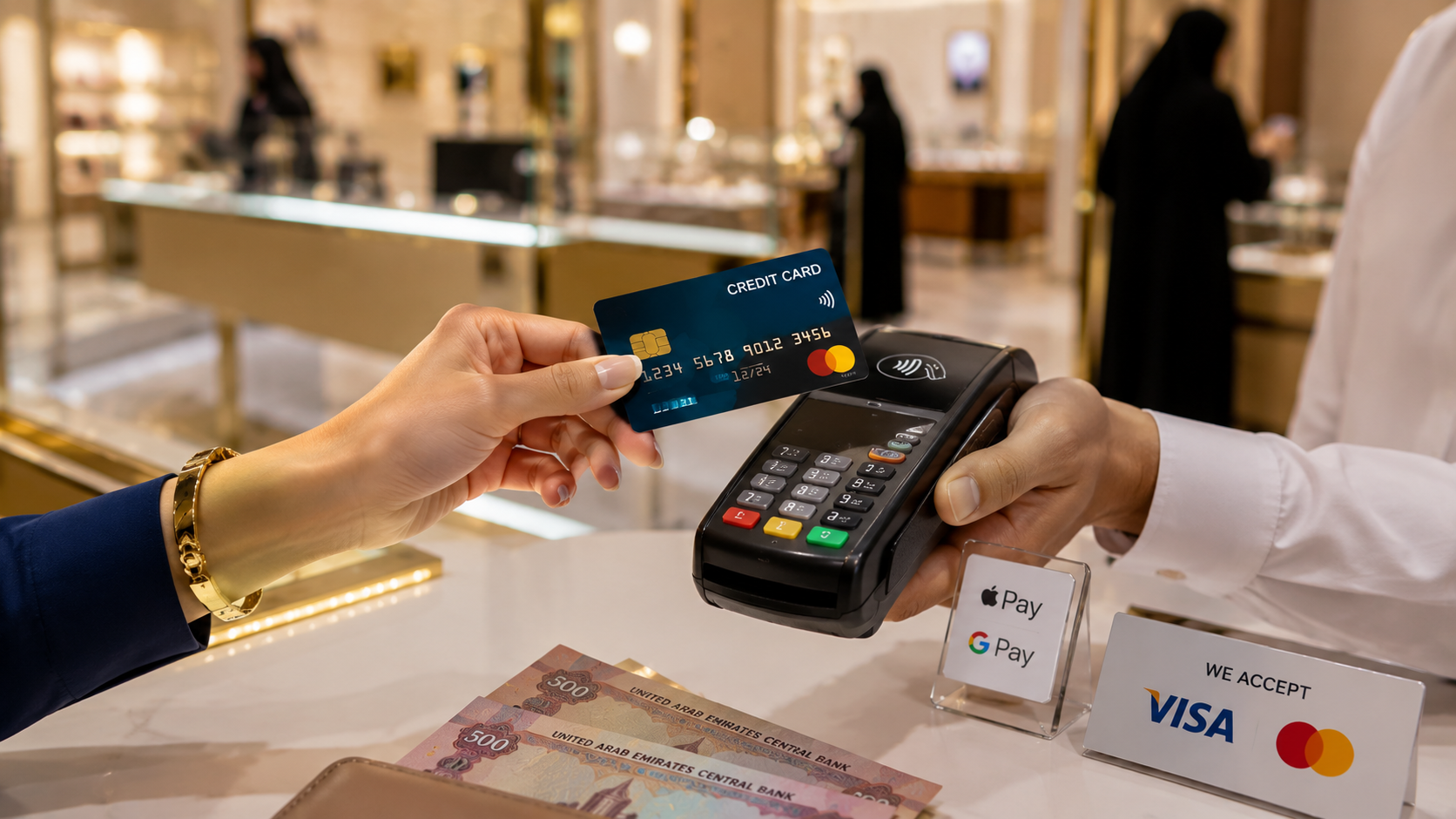
Contactless payment is standard. Foreign cards incur 1.5–3% foreign transaction fees. The single most important payment rule in Dubai: always pay in AED, never in your home currency — declining Dynamic Currency Conversion saves 2–5% on every transaction.
All UAE banks support Apple Pay, Google Pay, and Samsung Pay. Acceptance is essentially universal at any contactless terminal. Local wallets include Careem Pay, Emirates Digital Wallet (Klip), and FAB's Payit. International wallets accepted at major UAE merchants include Alipay+ (Alipay, GCash, KakaoPay, TrueMoney) and growing UPI integration via NPCI International + Network International. Mobile wallets bypass several frustrations of physical cards: no card to lose, biometric authentication, and reduced fraud blocks from issuing banks.
Cash represents just 18% of UAE payments but remains useful for tipping, traditional souks, small cafes in older districts, peer-to-peer transactions, and as emergency backup. Recommended carry: AED 100–300 in small denominations. Best exchange rates: licensed exchange houses (Al Ansari, LuLu, GCC Exchange, Wall Street Exchange). Worst: hotels, airport counters, pre-departure exchange outside UAE. Cash limits: amounts up to AED 60,000 (~$16,300) can enter or exit the UAE without declaration.
Russian-issued Visa and Mastercard have not worked for international transactions since 2022. MIR cards are not widely accepted. Workarounds: UnionPay cards issued in Kazakhstan, Kyrgyzstan, Uzbekistan, or Turkey; cash exchanged from USD/EUR; cryptocurrency for larger purchases; UAE-issued cards (for residents). UAE-issued Visa and Mastercard from a local bank work normally. For broader UAE property investment context including payment and financing approaches, see: off-plan vs resale property in the UAE: investment, income and risk compared.
Dubai Metro, Tram, buses, and water transport do not accept bank cards or cash — only Nol card. Red ticket (AED 2) for single use; Silver Nol (AED 25) for regular use; Gold Nol (AED 25) for premium class; Blue (AED 70, personalised) for long-term residents. Standard taxis accept cards, Nol, mobile wallets, and cash.
Property and rental transactions operate primarily on bank cheques, not cards. The manager's cheque is a bank-guaranteed cheque drawn against pre-debited funds — it cannot bounce. Used for: property purchases, DLD registration fees, business deposits, major transactions. Issued in AED only, valid 6 months, costs AED 25–50. For complete details on all property transaction fees at the Dubai Land Department, see: DLD fees in Dubai. For how rental cheque-based payments work under Dubai tenancy law: what is a tenancy contract in Dubai: understanding lease agreements.
Personal cheques are standard for annual rent — landlords typically request 1, 2, 4, or 12 post-dated cheques covering the lease year. More cheques often mean higher annual rent: paying upfront in 1 cheque typically secures a 5–10% discount.
International wire transfer (SWIFT) is the standard for the bulk of property purchase funds — to developer escrow, seller account, or trustee account. SEPA available for EU transfers. Cryptocurrency is increasingly viable: DAMAC, Emaar, and other major developers accept BTC, USDT, ETH through VARA-licensed payment processors. Transactions are converted to AED and registered in DLD. Process takes 1–3 weeks. For the complete property transfer process at DLD: property transfer in Dubai: step-by-step legal process and fees explained. For how ownership type (freehold vs leasehold) affects payment structures: freehold vs leasehold property in Dubai: which is right for you.
Short-term visitors: one fee-free Visa/Mastercard + backup card + Apple Pay or Google Pay + AED 100–300 cash + Silver Nol for transport. Always pay in AED. New residents: Emirates ID → UAE bank account → UAE-issued debit card → local mobile wallet (Klip/Payit) → personalised Blue Nol → familiarise with manager's cheque. Property investors: UAE bank account with manager's cheque facility, international wire capability, documented source of funds for AML/KYC, optional crypto payment infrastructure.
Can I use US dollars or euros directly in Dubai?
Some hotels and shopping centres accept USD or EUR, but at unfavourable rates. Change is given in AED. Always pay in AED — exchange foreign currency at Al Ansari or LuLu before transacting.
Will my Russian Visa or Mastercard work in Dubai?
Russian-issued cards have not worked for international transactions since 2022. Use UnionPay cards from Kazakhstan/Kyrgyzstan/Turkey, cash, cryptocurrency, or — for UAE residents — UAE-issued cards from a local bank account.
Can I pay rent with a credit card?
Most Dubai landlords accept only cheques or direct bank transfers — credit card rental payment is uncommon. Personal cheques (1, 2, 4, or 12 post-dated) are the market standard.
How do I avoid foreign transaction fees?
Use a fee-free travel card (Wise, Revolut, ZEN, certain US/EU travel cards). Always pay in AED at the terminal — declining Dynamic Currency Conversion is independent of and additional to your card choice.
Is cryptocurrency really accepted for property purchases?
Yes — DAMAC, Emaar, and other major developers accept BTC, USDT, and ETH through VARA-licensed payment processors. Crypto is converted to AED and deposited to escrow before TAPU registration. Process takes 1–3 weeks.
For most visitors and residents, a Visa or Mastercard plus mobile wallet plus small cash handles every transaction. Complexity emerges for Russian/CIS users (UnionPay, crypto, UAE cards) and for property transactions (manager's cheque, wire transfer, increasingly crypto). For UAE property transaction documents and forms: RERA forms in Dubai. For agency commission structures: real estate agent commission in Dubai. Contact a DDA Real Estate advisor to set up the payment infrastructure for your UAE property purchase.